
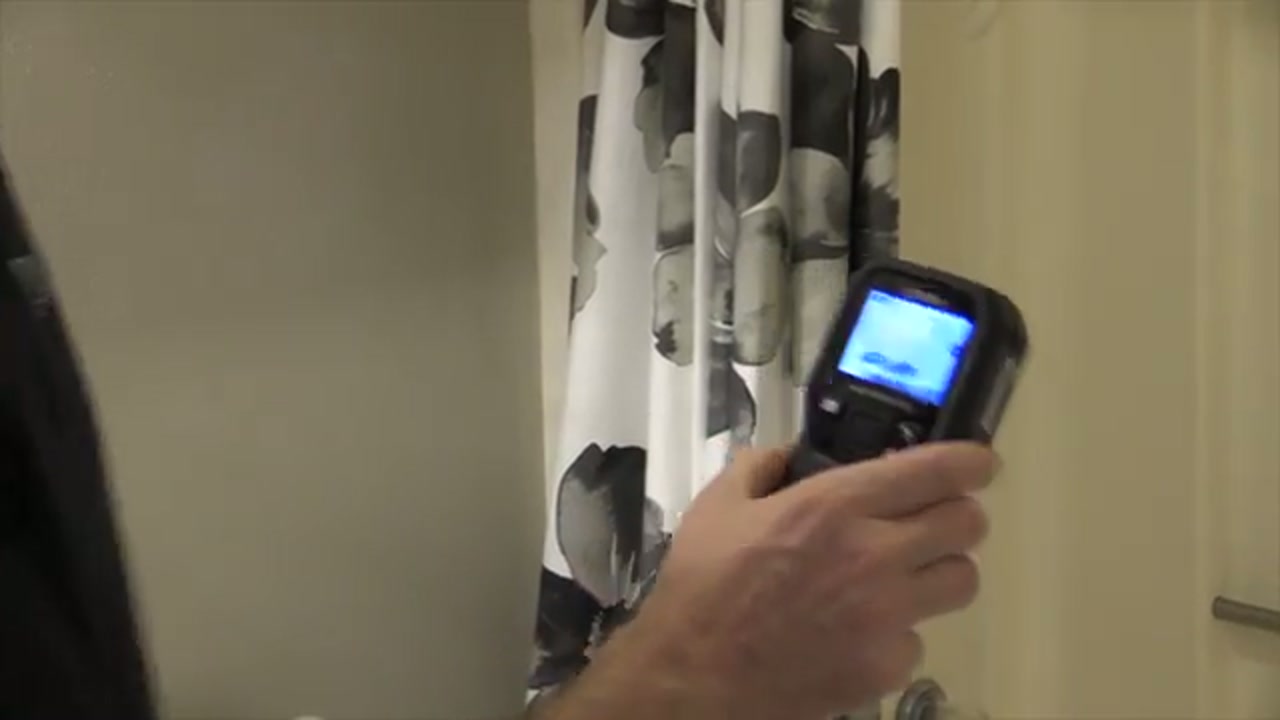
The old way to find a hidden leak was to open walls and break concrete until someone found wet pipe. The modern way starts with instruments that narrow the search to a small area first, so any opening is precise. Understanding the tools helps you understand what happens during a visit and why it is worth doing before any repair.
What does acoustic leak detection do?
Acoustic listening devices are sensitive microphones that pick up the sound of water escaping a pressurized pipe. A pinhole leak in a copper line produces a distinct high-frequency hiss that these devices can hear through concrete, soil, and flooring.
The specialist moves the sensor across the floor or ground in a grid pattern, listening for where the sound is loudest. The loudest point usually marks the leak. This method works best on pressurized supply lines and in quiet conditions, which is why the house needs to be still during the test.
Acoustic detection is often the primary tool for slab leaks because it can distinguish the leak's sound from normal background noise and zero in on a location within inches.
How does thermal imaging find leaks?
A thermal imaging camera sees temperature differences on surfaces. When hot water leaks from a pipe under a slab, it warms the concrete and flooring above it, and that warm patch shows up clearly on the camera even when it is too subtle to feel with a bare foot.
Thermal imaging is especially useful for hot water line leaks, which are common under slabs. It is less useful for cold water leaks, which do not change the surface temperature enough to stand out. Specialists often pair it with acoustic listening: the camera finds the warm area, and the acoustic sensor confirms the exact point.
The scan itself is quick and completely non-invasive. The camera never touches your floors.
What is tracer gas leak detection?
For leaks that are hard to hear or see with heat, specialists can drain a section of pipe, fill it with a safe tracer gas, and then use a sensitive detector at the surface to find where the gas escapes. The gas rises through concrete and soil, and the detector picks up even tiny amounts.
This method is valuable when multiple leaks are suspected, when the pipe layout is unusual, or when acoustic and thermal methods have not given a clear answer. The gas used is non-toxic and does not harm your plumbing. It is a precision tool for difficult cases, not the first thing tried on every visit.
What do moisture meters and pressure tests tell a specialist?
A moisture meter measures the dampness of building materials like drywall, wood, and concrete. Dragging one along a wall or floor maps out the damp area, which points back toward the source. High readings in one spot with dry readings nearby draw a bullseye around the leak.
Pressure testing works differently. The specialist isolates a section of plumbing and pressurizes it, then watches whether the pressure holds. A dropping reading confirms a leak exists in that section even if no instrument can hear it yet. This is useful for confirming a problem before the finer locating tools come out, and for verifying that a repair actually sealed the leak afterward.
What does a leak detection visit look like, step by step?
Every home is different, but a typical visit follows this pattern:
- Interview. The specialist asks what signs you have noticed, when they started, and where. Your observations guide where the testing begins.
- Meter check. With everything off, the specialist confirms water is actually leaving the system and estimates the severity.
- Isolation. Sections of plumbing are shut off or capped to narrow the leak to one line or area, for example hot versus cold, or slab versus yard.
- Locating. The specialist applies the right tools for the situation: acoustic listening, thermal imaging, tracer gas, or a combination. This is the careful, methodical part.
- Marking. The leak location is marked directly on the floor, wall, or ground so there is no ambiguity.
- Report. You get an explanation of what was found and a written report documenting the location. This report is what you hand to the plumber and, if needed, your insurance company.
Most residential visits take one to three hours depending on the complexity of the plumbing and how many areas need testing.
Do specialists have to cut into walls or floors to find a leak?
No. That is the entire point of detection. The tools above are designed to locate leaks through existing surfaces. Cutting and opening things up is the repair phase, and it happens only after the location is confirmed.
If someone suggests opening your floor or wall to "take a look" before any testing, that is not leak detection. That is exploratory demolition, and it is exactly the expense and mess that detection exists to prevent.
What should I do to prepare for a detection visit?
A little preparation makes the visit smoother:
- Make sure an adult is home who can describe the signs and answer questions.
- Clear access to the water heater, main shutoff valve, and any areas where you noticed signs.
- Keep the house quiet during the acoustic testing; turn off TVs, music, and loud appliances.
- Have your recent water bills handy if the sign was a bill spike.
- Note any past plumbing work, repipes, or foundation repairs you know about.
You do not need to move furniture out of whole rooms. The specialist will tell you if anything specific needs to be shifted.