
This guide describes repair approaches in general terms so you understand the conversation. It is not a recommendation for your specific home. Actual repairs should be performed by a licensed plumber, who will assess your slab, your pipe material, and the leak's location before suggesting a path. Talk to a licensed plumber about which option fits your situation.
Why does accurate leak location matter before any repair?
Every repair option below starts from knowing exactly where the leak is. Without that, a plumber is guessing, and guessing under a concrete slab means opening more concrete, more flooring, and more of your home than necessary.
A detection report that marks the leak within inches lets the plumber plan the smallest possible intervention. That precision affects the cost of the repair itself and the cost of putting your home back together afterward. Detection is the step that keeps the repair from becoming a bigger project than the leak required.
If you have not had the leak located yet, start with our guide to how detection works or schedule a visit.
What is a spot repair through the slab?
A spot repair means opening the floor directly above the leak, breaking through the concrete at that one point, fixing the damaged pipe section, and then patching the concrete and flooring back.
How it generally works: the plumber cuts a small section of flooring, jackhammers or cores the concrete, exposes the pipe, cuts out the failed section, and installs new pipe with proper fittings. Then the concrete is patched and the flooring restored.
Pros: It is the most direct fix and usually the least expensive option when there is a single, clearly located leak. The rest of the plumbing system is untouched.
Cons: It involves breaking concrete inside your home, which means noise, dust, and flooring repair afterward. If the pipe is old and corroded in multiple places, fixing one spot may just move the next failure down the line.
Spot repair makes the most sense for a single leak in otherwise sound plumbing, where the detection report gives a confident, precise location.
What does rerouting the line involve?
Rerouting means abandoning the leaking under-slab line and running a new line through a different path, typically through walls, the attic, or along the exterior, to serve the same fixtures.
How it generally works: the plumber caps off the old line under the slab and installs new piping overhead or through accessible spaces from the water source to the fixture. The old pipe stays buried and unused.
Pros: No concrete is broken inside the home, so there is no jackhammering, no dust from demolition, and no slab patching. It also sidesteps the question of what condition the rest of the buried line is in, because the buried line is no longer used.
Cons: The new line runs through visible or accessible spaces, which can mean opening some drywall and patching it afterward. In an attic, the new line needs proper insulation to protect against the freezes Texas does get. It is generally more expensive than a single spot repair.
Rerouting is often suggested when the buried line has failed in more than one place, when the pipe material is known to be problematic, or when the homeowner wants to avoid breaking the slab.
What is tunneling under the slab?
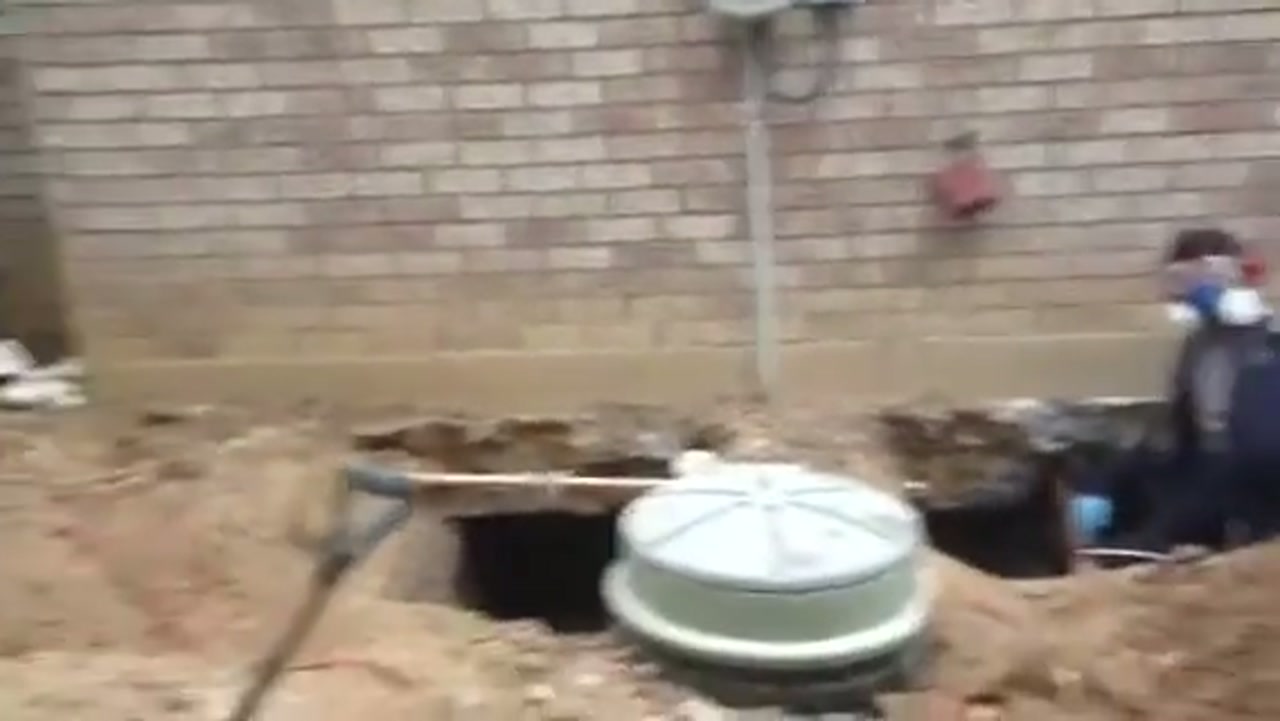
Tunneling means digging a horizontal passage under the foundation from outside the home to reach the leaking pipe from below, without breaking through the slab or the floors above it.
How it generally works: excavators dig an access pit outside the foundation, then hand-dig a tunnel beneath the slab to the leak location. The plumber repairs the pipe from underneath, and the tunnel is backfilled afterward.
Pros: Your floors, tile, and interior finishes are completely undisturbed. For leaks under expensive flooring or in the middle of a large slab, this avoids the most disruptive part of a spot repair.
Cons: It is labor-intensive and generally the most expensive of the three approaches. It requires enough clearance and suitable soil to tunnel safely, which is not the case for every home or every leak location. The work takes longer.
Tunneling tends to make sense for leaks under areas where breaking the floor would be especially costly or disruptive, provided the site conditions allow it.
How do these options compare side by side?
| Spot repair | Rerouting | Tunneling | |
|---|---|---|---|
| Concrete broken | Yes, at one point | No | No |
| Interior disruption | Flooring and dust at the repair point | Some drywall work | Minimal inside the home |
| Addresses old pipe elsewhere | No, only the one spot | Yes, the line is abandoned | No, only the one spot |
| Typical relative cost | Lowest | Middle | Highest |
| Best when | Single leak, sound pipe, precise location | Multiple failures or bad pipe material | Leak under expensive finishes |
These are general comparisons, not quotes. Your plumber's assessment of your specific leak may point clearly to one option.
What questions should I ask the plumber?
Bring your detection report and ask:
- Which repair approach do you recommend for this specific leak, and why?
- What will the total project involve beyond the pipe fix: concrete, flooring, drywall, painting?
- How will you protect the rest of the home from dust and damage during the work?
- What is the warranty on the repair itself?
- Should I expect other sections of this line to fail, given its age and material?
- Will the repair require any permits or inspections?
A plumber who answers these directly and explains the reasoning is a plumber you can trust with the decision.