
A slab leak starts as a pinhole in a water line running beneath your concrete foundation. Water seeps into the soil and the slab itself. Because the leak sits under your floor, the first signs show up in strange places: a patch of floor that feels warm under bare feet, a water bill that climbs for no reason, the faint sound of running water when every fixture is off.
Flower Mound homes are especially exposed to this. Slab-on-grade foundations are common here, and they sit on expansive North Texas clay soil that swells after rain and shrinks in dry heat. That constant movement works against the copper lines under the slab, wearing them down until one gives way. Add the age of many Flower Mound neighborhoods and you have one of the most frequent leak problems in Denton County.
What Are the Warning Signs of a Slab Leak?
The classic signs, answered directly:
- A warm or hot spot on the floor. A hot water line leaking under the slab warms the concrete above it. If one patch of tile or wood floor feels noticeably warmer than the rest, that is a strong indicator.
- A water bill that jumps without explanation. Compare your bill to the same months last year. A steady climb with no change in usage often points to a leak underground.
- The sound of running water when everything is off. Turn off every tap, the dishwasher, the washing machine, and stand quietly. A hissing or running sound near the floor means water is moving somewhere it should not be.
- Damp carpet, warped flooring, or a mildew smell. Water wicking up through the slab can reach your flooring and baseboards. Musty odors in one room are worth investigating.
- Low water pressure. A leak in a supply line can steal pressure from the rest of the house.
If you are seeing two or more of these, do not wait for it to get obvious. Small slab leaks grow, and the longer water runs under your foundation, the more damage it does to the soil and the structure. Learn more in our guide to the signs of a slab leak.
How Do You Find a Leak Under Concrete Without Breaking It?
We combine two independent methods so they confirm each other.
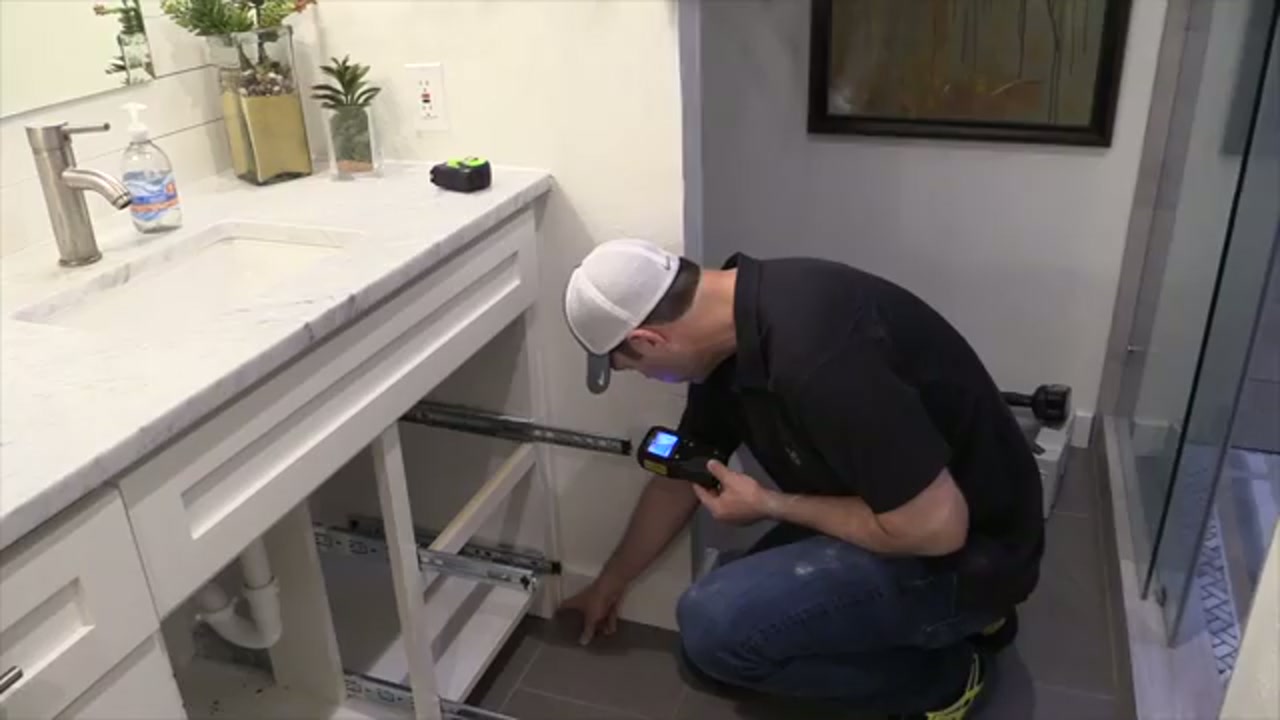
Acoustic listening comes first. Pressurized water escaping through a pinhole makes a distinct hissing sound that travels through concrete. The technician places sensors on the floor and sweeps the area, listening for the loudest point while filtering out background noise. The peak of the sound marks the leak, usually within a small area.
Thermal imaging comes second. A leaking hot water line warms the concrete above it; a leaking cold line cools it. A thermal camera displays those temperature differences as visible shapes on the floor surface. When the warm spot on the camera matches the loudest point on the acoustic equipment, the location is confirmed.
Moisture meters provide a third check where flooring allows. Together, these methods let us mark the leak location on your floor with tape or chalk, accurate enough that any repair work opens concrete in exactly the right place. Our process page walks through a full detection visit step by step.
What Happens After We Locate the Leak?
Detection is only the first half of the story. Here is what we deliver:
- A marked location. You see exactly where the leak sits, marked on the floor in your home.
- Written findings. A report describing the leak type, location, and the evidence behind the finding, with photos. This is yours to keep and share with plumbers or your insurer.
- An upfront quote. If repair work is needed, you get a clear written quote before anything is scheduled. No surprises later.
- Repair options explained. Slab leaks are typically fixed by a spot repair through the slab, a re-route of the line through the walls or attic, or a full re-pipe in older homes. We explain each option so you can decide with your plumber. Our guide to slab leak repair options covers the trade-offs.
Why Flower Mound Slab Leaks Need a Local Eye
Expansive clay soil does not behave the same in every city, and neither do the homes built on it. Flower Mound's mix of established neighborhoods and newer construction means we see everything from original copper systems to homes with mixed piping. We also know how hard freezes, like the one Texas saw in February 2021, can finish off a weakened line. Local experience shortens the search because we recognize the pattern before we start.
If you suspect a slab leak, call (972) 945-2293. We answer 24/7, and a fast answer is the cheapest part of a slab leak.